
Why Theseus
Theseus takes its name from the figure who entered the labyrinth, confronted what was at its centre and found his way back by holding onto a single thread.
For us, that thread is lineage.
Our mission is to take that complexity out of the way. The runtime carries determinism, lineage, replay and change control, so the experts who own the logic spend their time on insight and innovation, not on the infrastructure underneath it.
It reflects three principles behind the platform.
The labyrinth
Critical systems accumulate layers: applications, services, scripts, queues, spreadsheets and manual processes.
Theseus turns that fragmented estate into an explicit execution graph. Logic, data movement and dependencies become visible, structured and traceable.
Complexity does not disappear. It becomes something you can understand and control.
The ship
The Ship of Theseus could be rebuilt piece by piece while remaining the same ship.
Theseus applies the same principle to software infrastructure. Data sources, calculations, execution graphs and interfaces are modular and versioned. Individual components can be replaced without rebuilding the entire system around them.
Change is not treated as an exceptional event. It is part of the operating model.
The minotaur
Legacy systems consume increasing amounts of engineering time while becoming progressively harder to change.
Additional tooling rarely solves the underlying problem. It adds another layer around an architecture that was not designed for traceability, determinism or continuous evolution.
Theseus addresses the problem at the runtime layer.
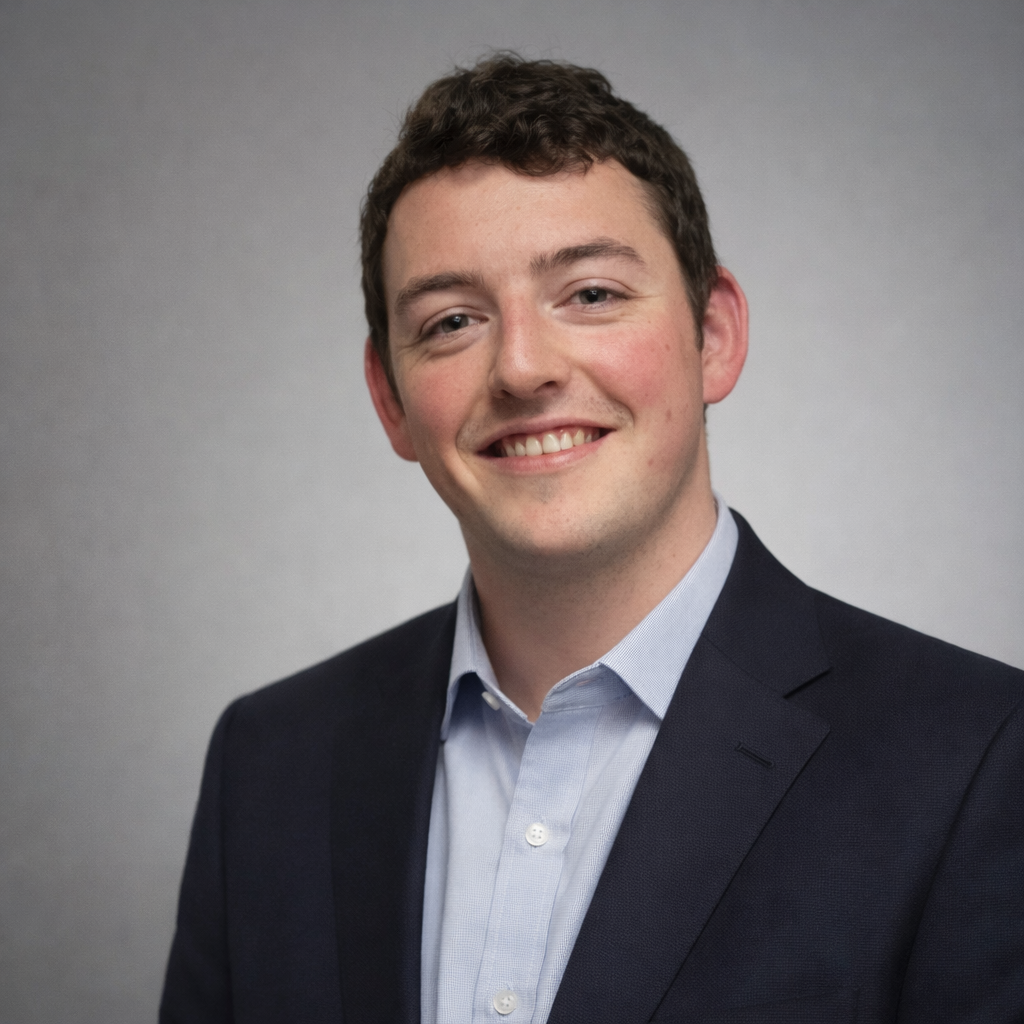
Andreas Campbell
Founder and CEO
Built real-time FX and rates infrastructure at Morgan Stanley. Saw first-hand how slow deployment processes, fragmented tooling, and poor auditability created unnecessary operational risk. Founded Theseus to replace process-driven governance with a deterministic runtime.
Morgan Stanley
Four years working on real-time trading and risk technology, including FX and rates risk and P&L infrastructure.
Amazon Web Services
Engineering experience within AWS WorkSpaces, improving the performance of client data transfer.
Security research
Recognised for responsibly disclosing security vulnerabilities affecting organisations including Uber, Skyscanner and Under Armour.
Critical guarantees should be enforced by the runtime, not left to convention, documentation or manual process.
An output without its lineage is incomplete. Systems should preserve the evidence required to understand what happened and why.
A critical system that cannot evolve safely becomes a liability. Modularity, versioning and validation must be part of the architecture.
The teams responsible for the logic should be able to build, test, deploy, operate and investigate it without unnecessary hand-offs.
The purpose of the platform is not to replace domain experts. It is to remove the technical friction that prevents their expertise from reaching production.
Where we are
Theseus Labs Ltd is based in London, United Kingdom.
We are initially working with capital-markets teams whose pricing, risk and decision processes demand low latency, traceability and operational control.
The same architectural problem exists wherever important decisions depend on complex real-time infrastructure.
Get in touch
Speak with us about deploying Theseus in a capital-markets environment, becoming a design partner or exploring the technical architecture behind the platform.